Joint preservation is a treatment approach focused on protecting the natural structures of a joint, relieving pain, restoring stability and function, and helping patients remain active for as long as possible. Depending on the condition and extent of joint damage, treatment may involve lifestyle and activity modification, physiotherapy and rehabilitation, medicines or injections where appropriate, arthroscopic procedures, cartilage restoration, meniscal repair, or ligament repair and reconstruction. The aim is simple: understand the cause of the joint problem early, treat it appropriately, and preserve the natural joint whenever it is medically suitable.
Joint preservation is not a single procedure. It is a patient-specific approach to diagnosing and treating joint problems while preserving as much healthy natural joint tissue and function as possible.
A joint is made up of several structures that work together, including cartilage, menisci, ligaments, tendons, muscles and surrounding tissues. Damage to one structure can affect the way the entire joint functions.
For example, a meniscal tear, ligament injury or cartilage defect may alter the way forces are distributed through the knee. Over time, certain untreated or poorly managed problems may contribute to pain, instability and degenerative changes.
Joint preservation focuses on identifying the problem and selecting treatment according to:
There is no single treatment that is appropriate for every patient. A detailed clinical assessment is therefore an important first step.
Our joints are designed to provide smooth movement, absorb load and allow us to perform everyday activities. When cartilage, menisci, ligaments or other supporting structures are damaged, the mechanics of the joint can change. Osteoarthritis, for example, affects the entire joint and may cause pain, stiffness, swelling and reduced mobility. Previous joint injuries, repeated stress, age and excess body weight can all contribute to the development or progression of osteoarthritis. Early diagnosis and an individualized management plan can help optimize function and quality of life. This is why joint preservation is important.
The goal is to understand why the joint is painful or failing, address the underlying problem where possible, preserve healthy structures, restore function and help the patient maintain an active lifestyle.
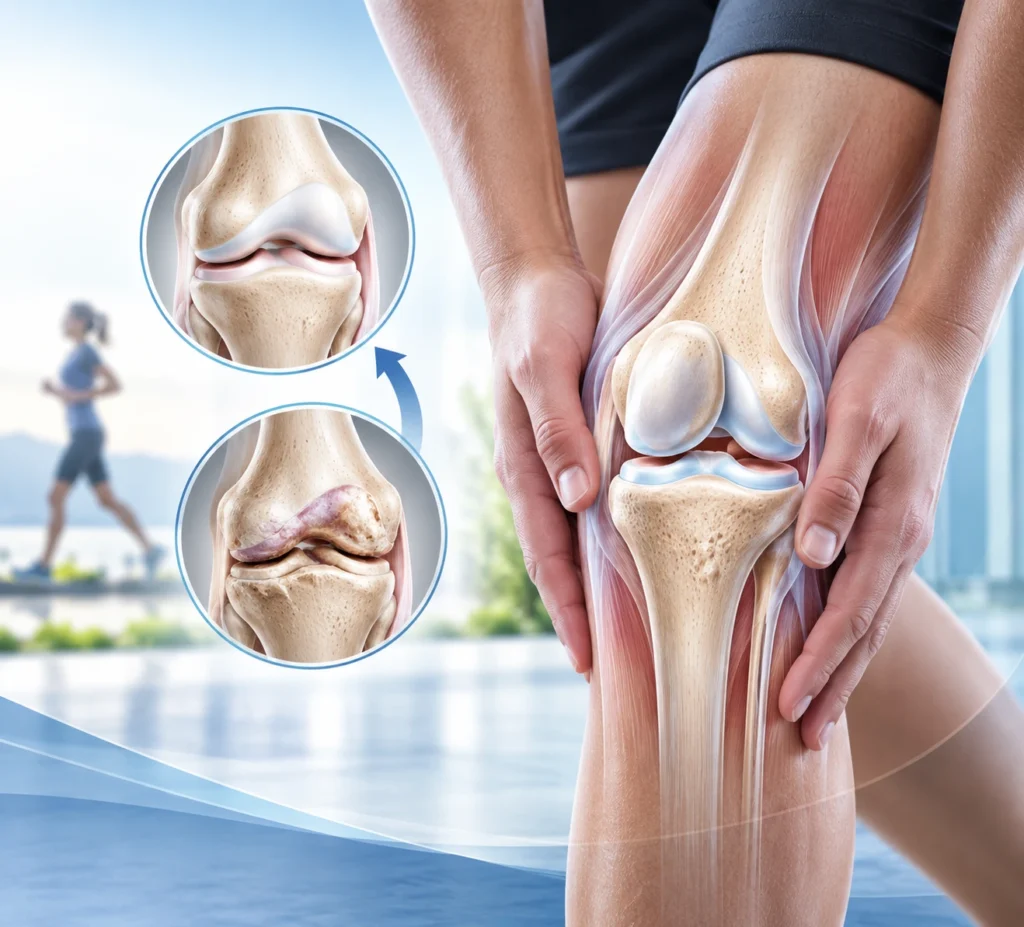
Joint preservation may be considered in patients with problems such as:
Patients with early or localized degenerative changes may benefit from a structured treatment plan aimed at improving symptoms, function and joint health.
Focal cartilage defects can cause pain, swelling, catching or difficulty with certain activities. Selected cartilage injuries may be evaluated for joint-preserving treatment.
Repeated episodes of instability can interfere with daily activities and sports. Identifying and addressing the underlying cause may help restore more normal joint function.
Ligament injuries can cause instability and may affect normal joint mechanics. In appropriately selected patients, ligament repair or reconstruction can help restore stability and function.
Athletes and active individuals may develop cartilage, meniscal or ligament injuries that require careful assessment to determine whether the joint can be treated while preserving its natural structures.
The meniscus helps distribute load and contributes to stability within the knee. When repair is possible, preserving functional meniscal tissue is an important consideration. AAOS guidance emphasizes preserving as much functional meniscal tissue as possible when surgery is indicated.
Persistent knee pain and stiffness can limit mobility and daily activities. Proper evaluation helps identify the cause and guide effective, joint-preserving treatment.
Joint preservation and joint replacement are not competing treatments. They are different approaches for different stages and types of joint disease. Joint-preserving treatment may be appropriate when there is a treatable structural problem or when the joint still has sufficient healthy tissue to benefit from preservation. When arthritis or joint damage becomes advanced and significantly affects quality of life, joint replacement may be the more appropriate option. The important question is not: “How can I avoid surgery?” The better question is: “What treatment is appropriate for the condition of my joint?” A thorough evaluation helps determine whether conservative care, rehabilitation, arthroscopic treatment, joint-preserving surgery or joint replacement is the most appropriate option.
Treatment is selected according to the patient’s diagnosis rather than using a one-size-fits-all approach.
Not every joint problem requires surgery. Depending on the condition, treatment may include:
Arthroscopy is a minimally invasive surgical technique that allows an orthopaedic surgeon to examine and treat certain conditions inside a joint through small incisions. Depending on the diagnosis, arthroscopy may be used for conditions involving:
The meniscus acts as an important load-distributing and stabilizing structure in the knee, preserving the functional meniscus may be preferable to removing damaged tissue unnecessarily. The decision depends on factors such as:
Articular cartilage allows the joint surfaces to move smoothly. Cartilage has limited natural healing potential, so focal cartilage injuries require careful assessment. Depending on the location, size, depth and cause of the cartilage problem, treatment may range from rehabilitation and activity modification to selected cartilage-restoration or surgical techniques. The treatment decision should be based on the individual joint rather than simply the presence of a cartilage defect.
Ligaments provide stability and help guide normal joint movement. A significant ligament injury can result in instability, particularly during sports or activities involving cutting, pivoting or sudden changes in direction. When appropriate, ligament repair or reconstruction may help restore stability and protect joint function. The treatment plan depends on the specific ligament involved, the extent of injury, associated damage and the patient’s functional requirements.
Abnormal joint alignment can increase stress on cartilage and accelerate joint damage. In selected patients, joint-preserving procedures may help improve alignment and reduce abnormal loading.
Treatment may include:
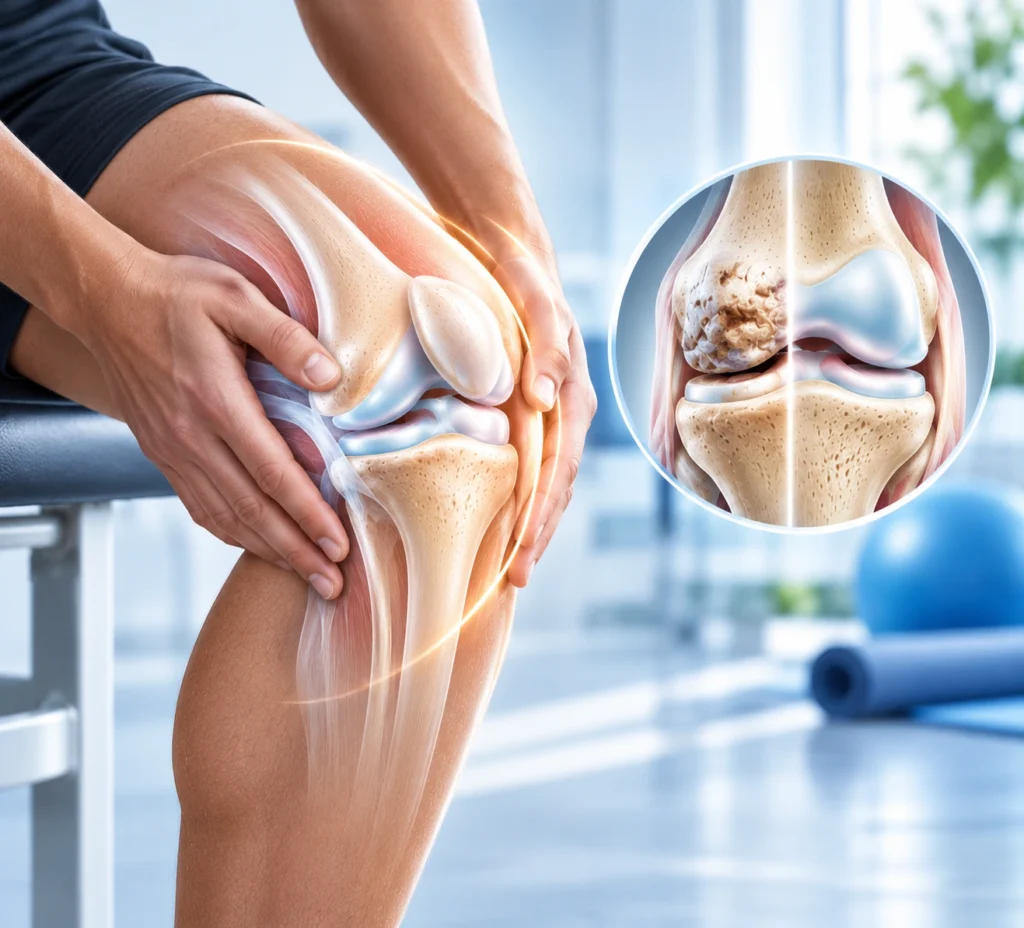
The knee is one of the most common joints affected by osteoarthritis and sports-related injuries. It contains several structures that work together:
Damage to one structure can influence the function of others.
Knee joint preservation may therefore involve addressing a specific problem such as a meniscal tear, cartilage defect or ligament injury rather than immediately replacing the entire joint. For selected patients, the objective is to preserve the healthy portions of the knee, improve function and maintain mobility for as long as reasonably possible.
A joint preservation consultation begins with understanding the patient’s symptoms, medical history and goals.
The joint is examined for pain, movement, stability, swelling, alignment and functional limitations.
MRI can be particularly useful for assessing soft-tissue structures such as menisci, ligaments and cartilage when clinically indicated.
The objective is to determine whether symptoms are coming from cartilage damage, meniscal pathology, ligament injury, arthritis, instability or another condition.
Treatment options are explained according to the patient's diagnosis, lifestyle, expectations and long-term joint health.
The final plan may involve rehabilitation and non-surgical care, minimally invasive treatment, joint-preserving surgery or joint replacement depending on the condition.
Persistent joint pain should not simply be accepted as a normal part of ageing. Osteoarthritis can develop gradually, while sports injuries and structural problems may initially appear manageable. Delaying assessment can sometimes allow symptoms, weakness or instability to interfere increasingly with daily activities. Early evaluation does not necessarily mean early surgery. In fact, an early assessment may help identify when non-surgical treatment and rehabilitation are appropriate, while also identifying patients who may benefit from timely intervention. The goal is to make the right decision at the right stage.
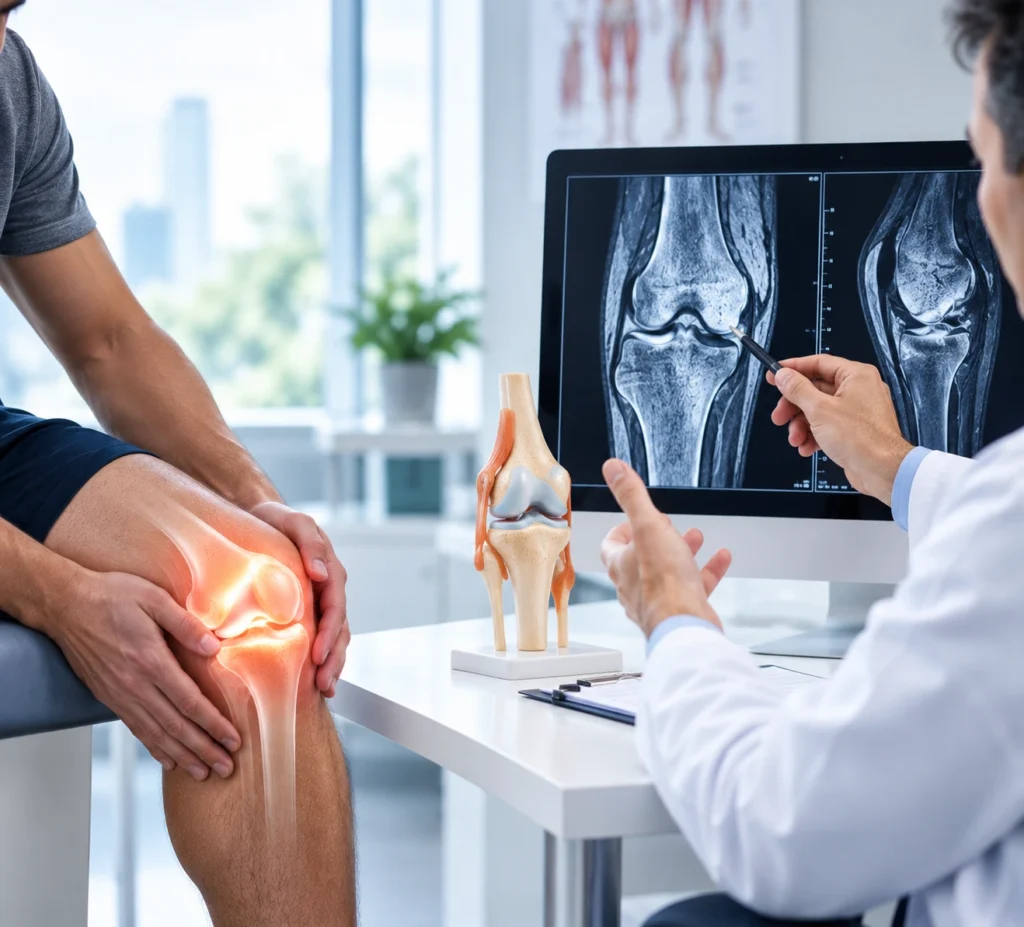

Every patient’s joint is different. Two people may have similar pain but completely different underlying problems. One may benefit from rehabilitation, another may require arthroscopic treatment, while a patient with advanced arthritis may be better suited to joint replacement. That is why treatment should not be based only on an MRI report or the severity of pain. A complete assessment considers: Diagnosis + Joint Health + Activity Level + Age + Lifestyle + Goals
The aim is to create a treatment strategy that makes sense for the individual patient.
Dr. Vibhu Bahl provides comprehensive orthopaedic care with extensive experience in the evaluation and treatment of knee, shoulder and other joint conditions. His clinical areas include knee arthroscopy, shoulder arthroscopy, meniscal repair, ligament-related procedures, knee replacement, hip replacement, shoulder replacement and complex trauma surgery. His approach to joint problems focuses on accurate diagnosis, appropriate treatment selection and helping patients regain mobility and function. For patients who may be candidates for joint-preserving treatment, the focus is on understanding the condition and considering the most appropriate option for preserving joint function whenever clinically possible.
Consider an orthopaedic evaluation if you experience:
Joint preservation means using appropriate medical, rehabilitation and surgical strategies to protect the natural structures and function of a joint whenever clinically possible.
Sometimes, but not always. Joint preservation is generally considered when the joint has a condition that can be treated while meaningful natural joint function remains. Advanced arthritis may require joint replacement.
Not in every patient. Some appropriately selected patients may be able to delay or potentially avoid joint replacement, but this depends on the underlying condition, extent of joint damage and response to treatment.
No. Joint preservation may be considered in patients of different ages depending on the diagnosis, joint condition, activity level and treatment goals.
If you have persistent joint pain, recurrent swelling, instability, locking, a sports injury or early arthritis symptoms, an orthopaedic assessment can help determine the cause and available treatment options.
Many patients with osteoarthritis can be managed without immediate joint replacement. Treatment may include exercise, rehabilitation, weight management, medicines and other appropriate interventions. However, advanced arthritis may eventually require joint replacement.
No. Some meniscus tears can be managed without surgery. When surgery is indicated, preserving as much functional meniscal tissue as possible is an important consideration.
Articular cartilage has limited healing potential. The appropriate treatment depends on the location, size, depth and cause of the cartilage injury and the overall condition of the joint.
The evaluation may include a physical examination and, when appropriate, X-rays or MRI. The tests depend on the suspected condition and are not necessarily the same for every patient.
Arthroscopy is a minimally invasive surgical technique that can be used to diagnose and treat selected joint problems. In appropriate cases, arthroscopic treatment can address conditions such as meniscal or cartilage injuries while preserving the rest of the joint.
The earlier a joint problem is properly assessed, the sooner you can understand what is causing your symptoms and what treatment options may be available. Consult Dr. Vibhu Bahl for a detailed orthopaedic evaluation and personalized joint preservation assessment.
Dr. Vibhu Bahl is a highly experienced Orthopaedic Surgeon in Delhi, with more than 26 years of experience in the field of orthopaedic surgery and patient care. He has developed extensive expertise in arthroscopic surgery, joint replacement, sports injuries, adult reconstruction, and complex orthopaedic trauma.